Technical development for artists
- Light design
- Wearables
- Robotics
We develop the technology behind performances and art installations, from stage lighting and wearables to robotics and interactive systems.
Four dancers and a robot dog share the stage. For Iron Skulls Co’s show Famulus 4.0, we built a custom controller for a Unitree Go2 robot dog, allowing an operator to control it live during the performance with easy-to-use controllers, such as an Akai APC mini mk2 and an 8BitDo gamepad. Óscar González, co-founder of Sensical and technical director at Iron Skulls Co, developed the system with the company.
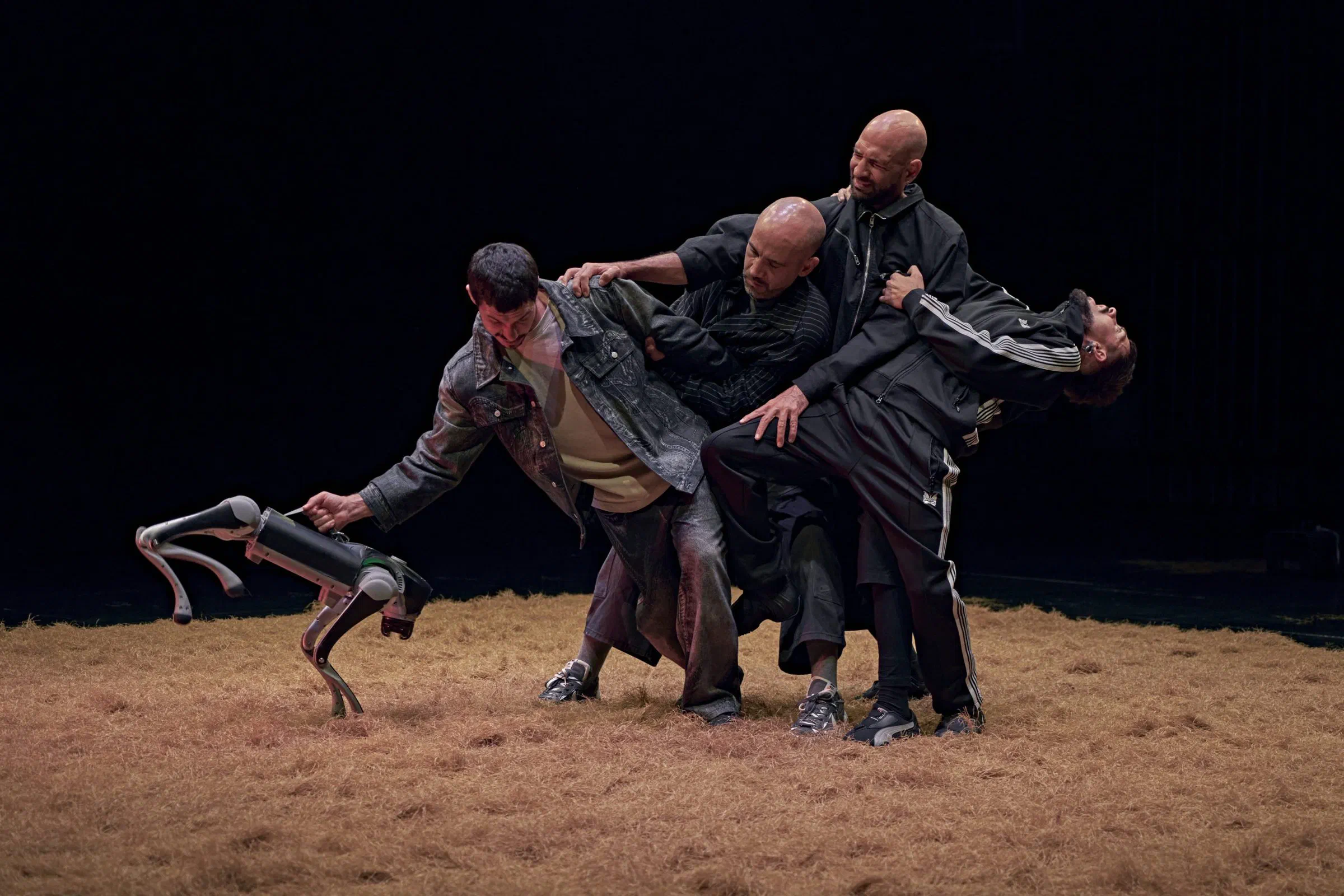
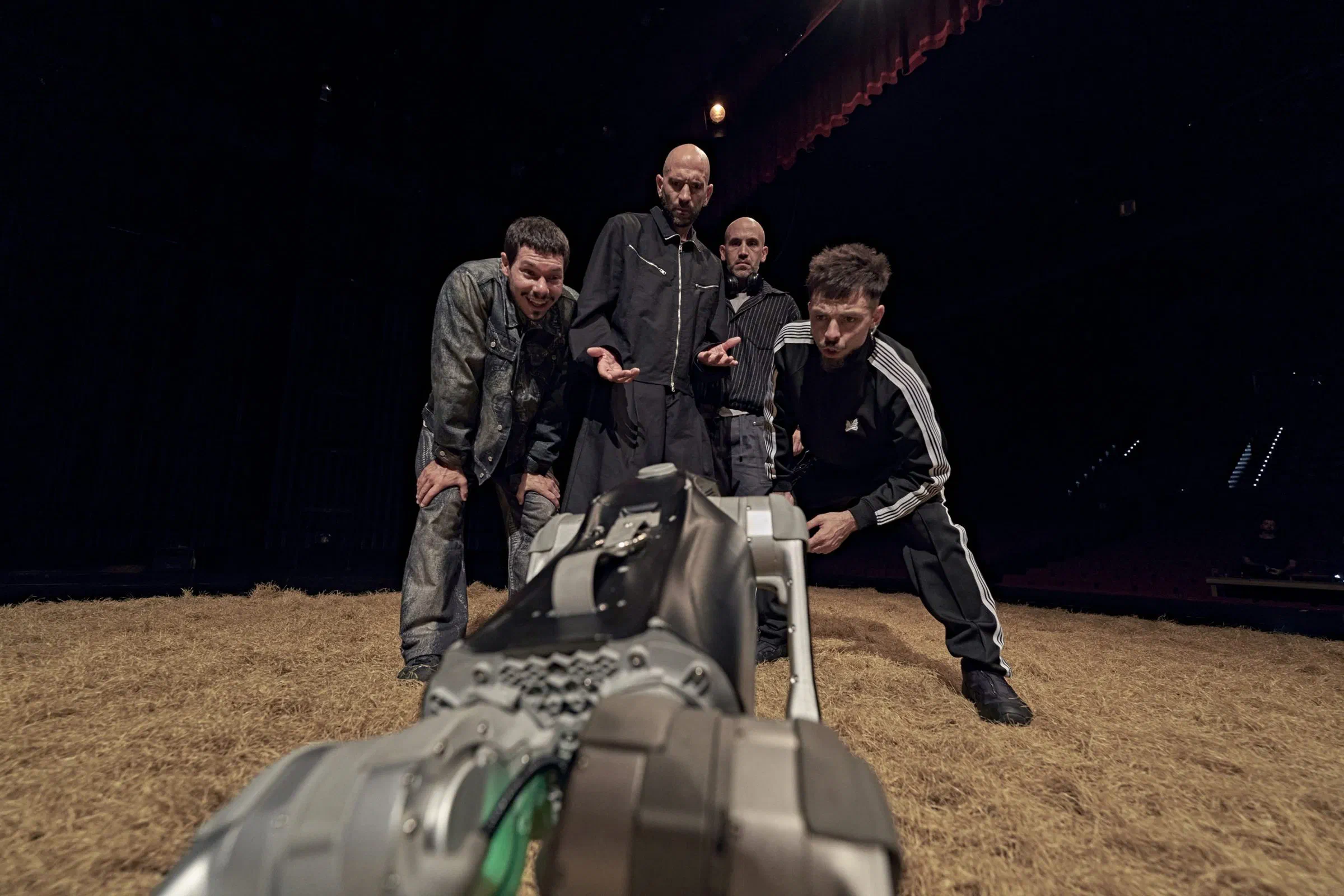
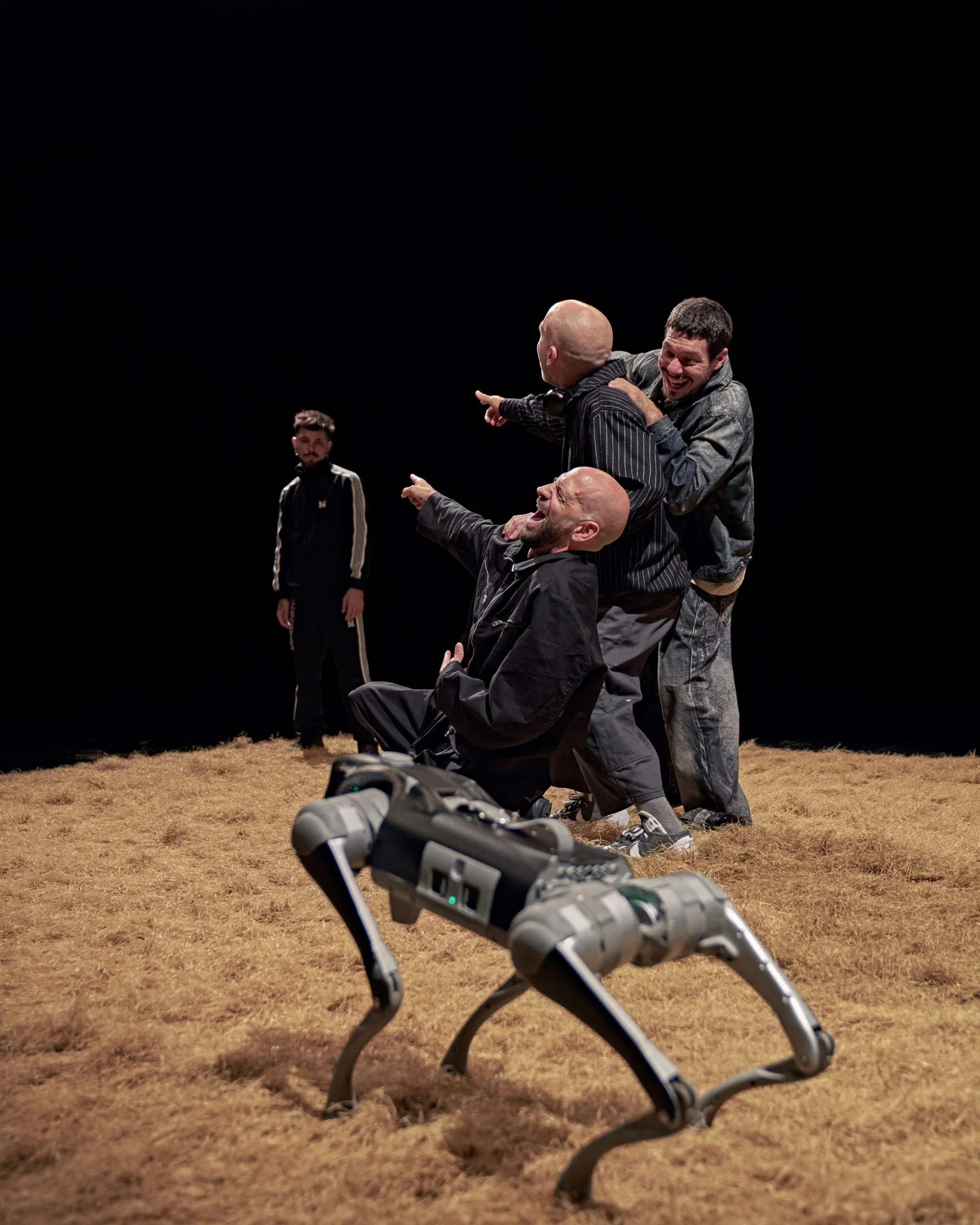
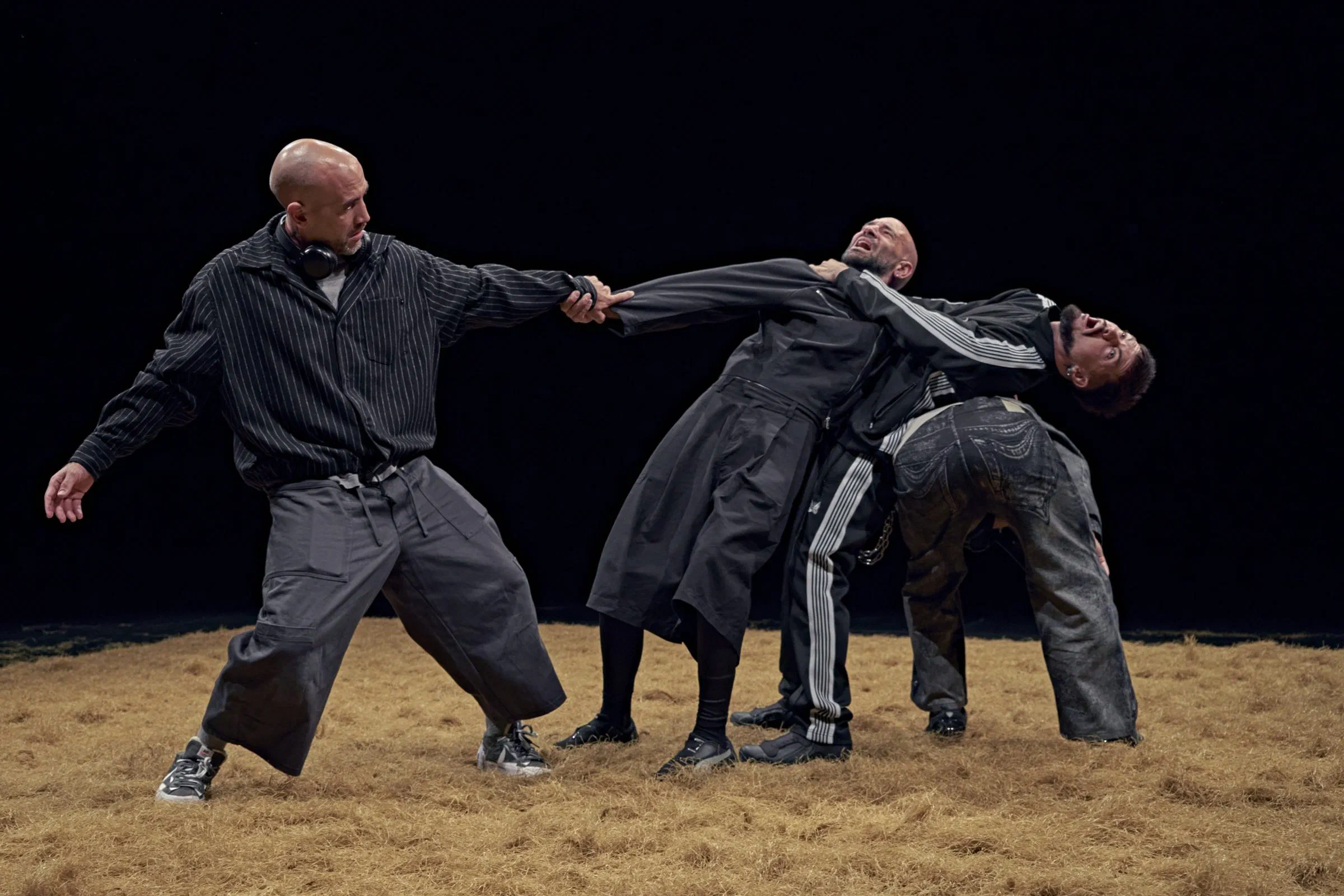
A 6 × 6 metre platform, bounded and infinite at the same time. Four people and a robot dog, in a dialogue between the human and the artificial. Named after the Latin famulus (servant) and the Fourth Industrial Revolution, Famulus 4.0 explores how fragile social bonds become in a time of hyperconnection and automation, through Iron Skulls’ theatrical breaking.
The show premiered on 16 May 2025 at Umore Azoka in Leioa, and it is designed for theatres, public spaces and unconventional venues. For the robot, that means it has to perform reliably wherever the show goes, and react to the dancers in real time.
The Unitree Go2 is designed to be driven from its own app and remote. However, a show needs more: precise, repeatable control, with every setting within reach, and a way to stop if anything goes wrong. With those requirements, we decided to write our own control system based on multi-node message buses, for controlling the robot from two different sources, and a centralised high-speed control interface. The main features are:
Some moments in the show need to be exactly the same every night. The operator can record a sequence of commands straight from the controllers, with its timing and an optional music track, and replay it later from a single pad, with an optional preview mode. A small desktop editor lets the team edit each recording’s details.
The system also has a dry-run mode, to rehearse the controls without the robot, and tools to play sounds on the robot’s own speaker. We are also experimenting with turning the robot’s foot sensors into MIDI notes, so that its steps can trigger sound.
The code is published under the GPL-3.0 licence on GitHub:
The quality of what we do stays the same, but we can be both formal and fun to work with at the same time.